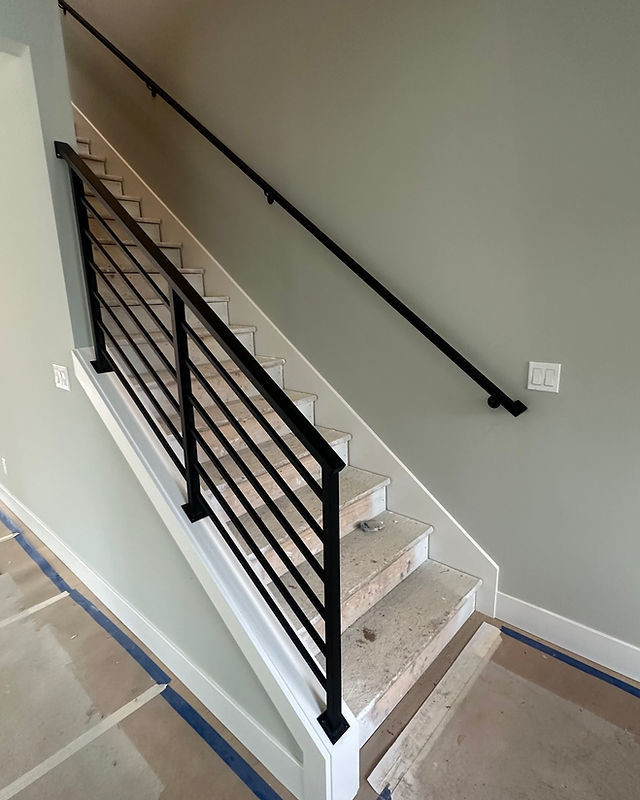
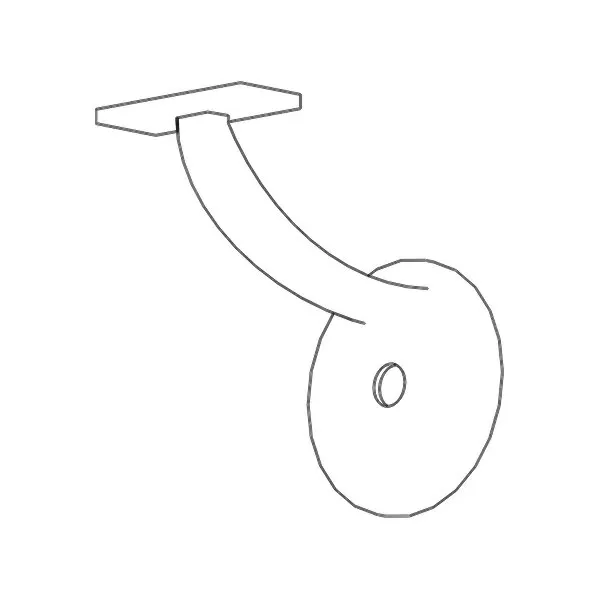
Round plate bracket
Curved arm, round wall plate, flat saddle. Suits a wood top or flat bar.
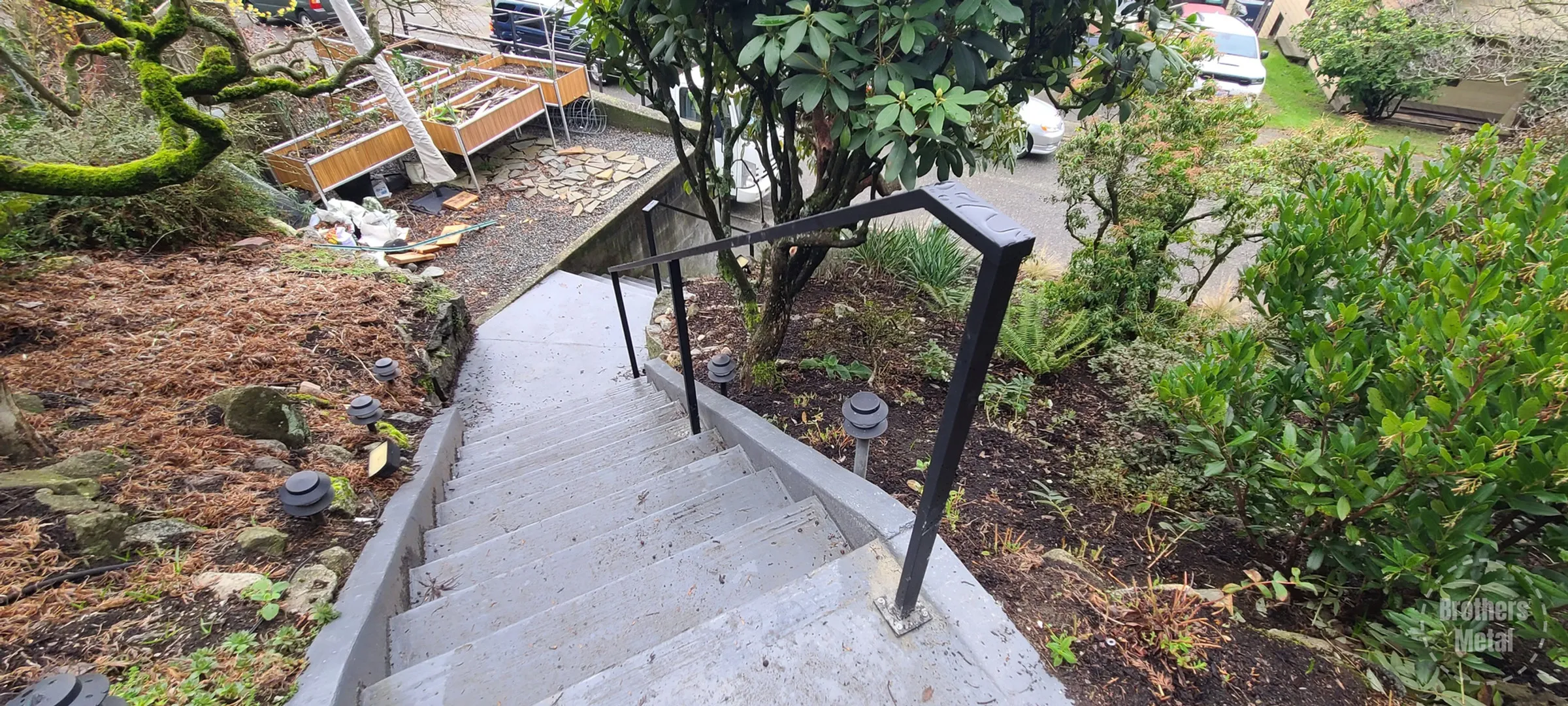
Handrails on posts for outdoor and indoor steps, and grab rails (wall-mounted handrails) for stairs and hallways. Measured on site, built in our Everett shop and installed by our own crew.
Which Rail Do You Need?
Both give you something to hold. A handrail stands on its own posts beside open steps; a grab rail is fixed to the wall. Pick one to jump to its options.
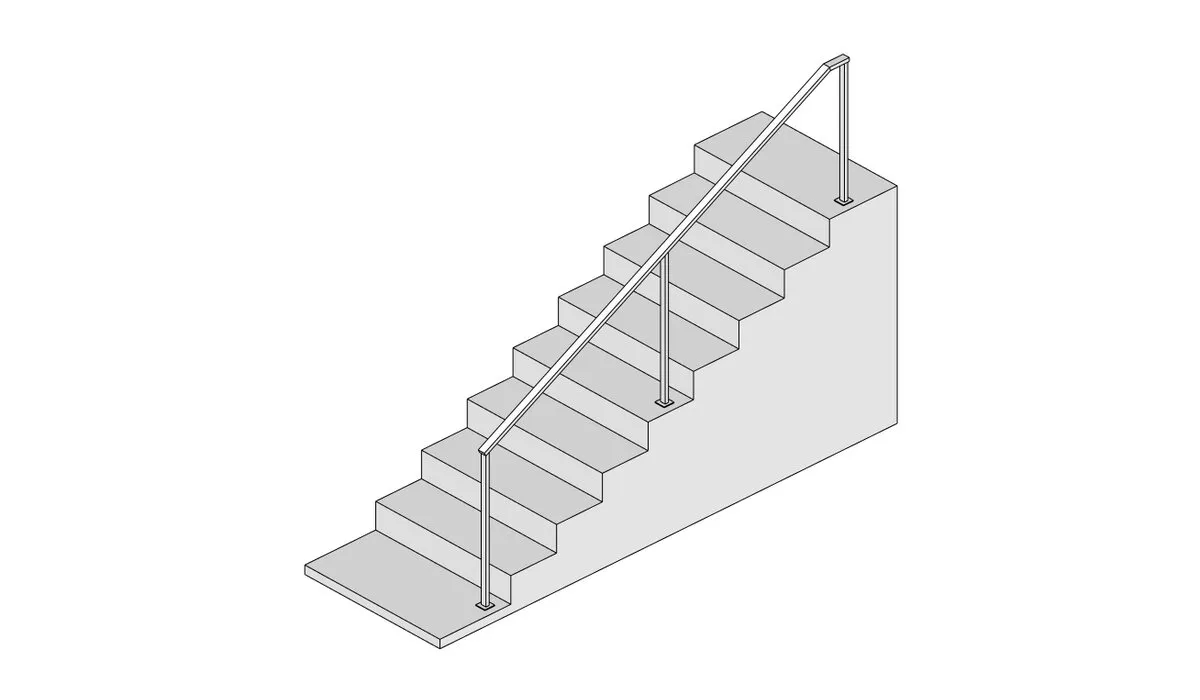 Posts mount
A rail on posts with nothing between them. For outdoor and indoor steps, entries and slopes where the side is open but there is no big drop.
See optionsSee handrail options ↓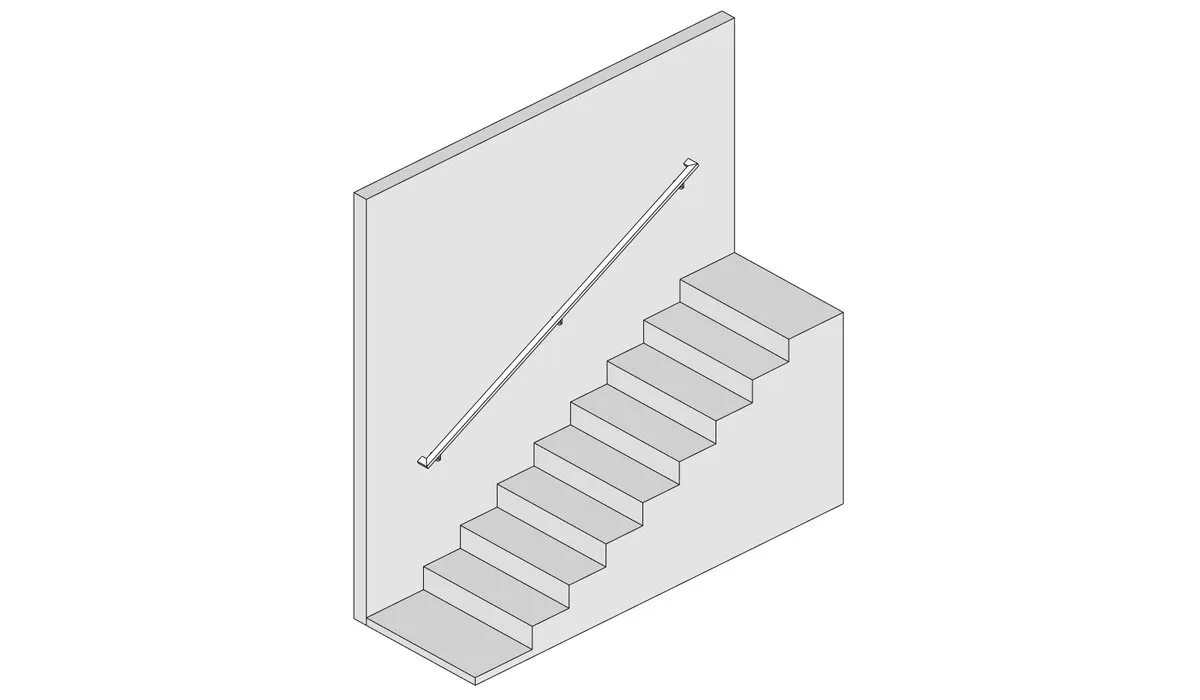 Wall mount
Also called a wall-mounted handrail. Fixed to the wall on brackets, along enclosed stairs, hallways and entries.
See optionsSee grab rail options ↓Open side drops more than 30"? That needs a guard railing with infill. Metal railings →
Posts Mount

A solid rail on steel posts, made to the run and pitch of your steps. Outside, most of ours go on concrete steps at front entries and garden paths; inside, on stair and stage steps. The posts are bolted down with base plates and finished in matte black.
Why choose it
Good to know
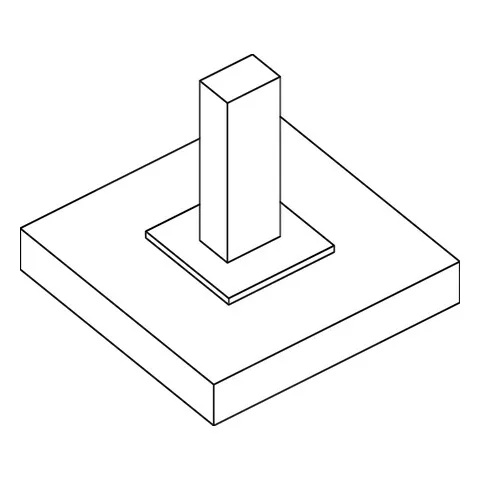
Surface mount
Base plate on concrete or wood
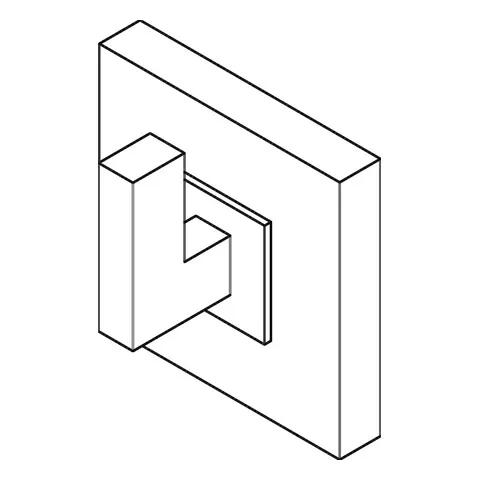
Side mount
On the side of the steps
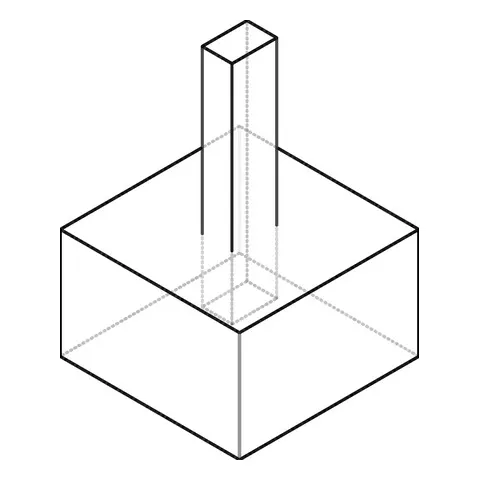
Core-drilled
Grouted into the concrete
Wall Mount
The profile is the shape your hand closes around. Each one is cut and welded to the length of your wall and sized to stay graspable under code.
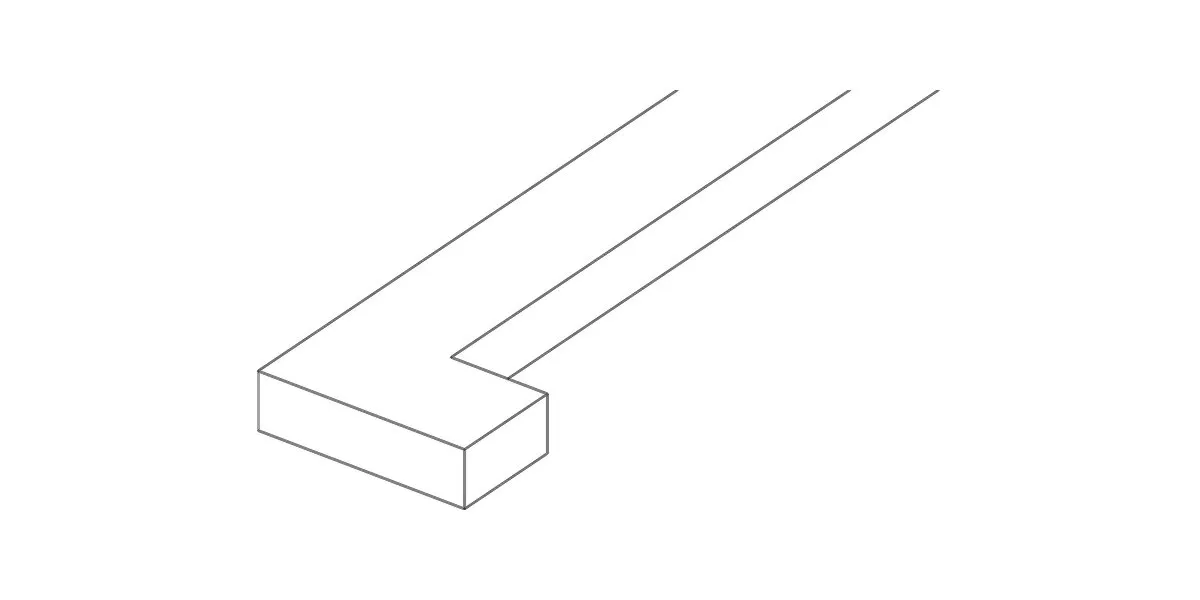
A flatter tube laid flat on top. It looks slimmer from the side than square and stays stiff over long runs.
Why choose it
Good to know
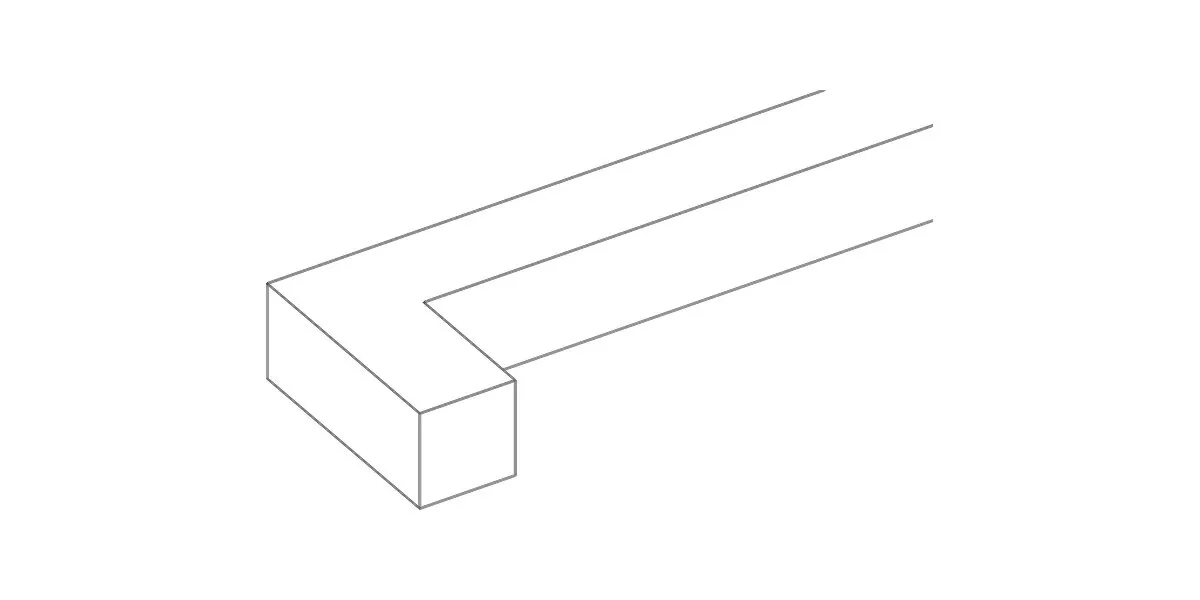
Crisp square tube. It is the modern look on most of the new stairs we build, and it matches our horizontal and vertical railings when the stair also has an open side.
Why choose it
Good to know
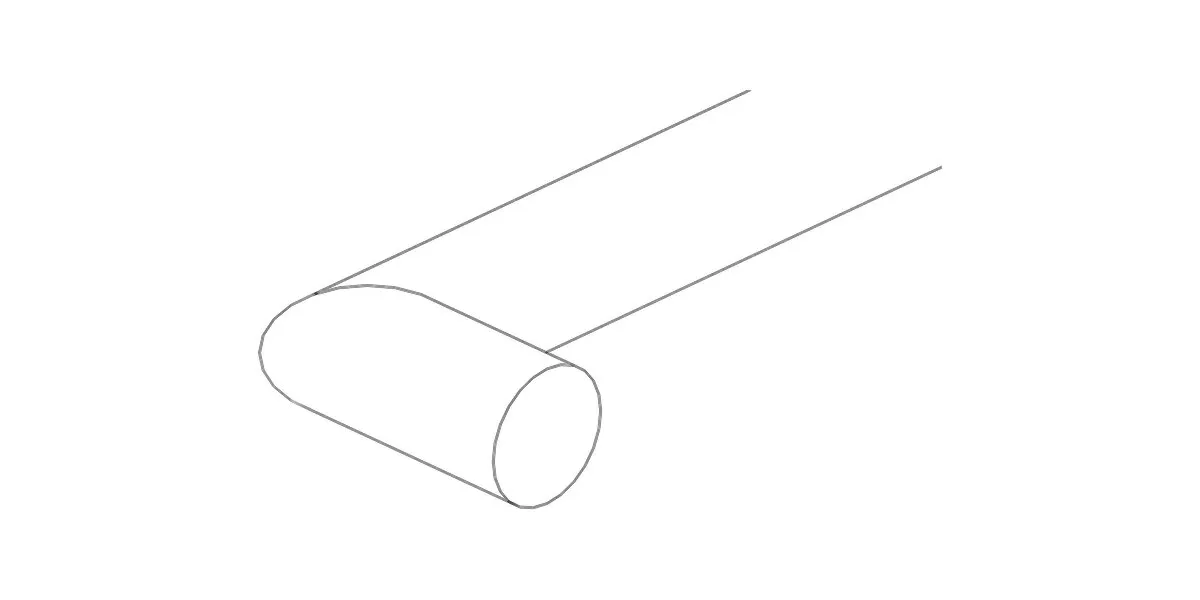
The classic grip. A round tube fills the hand the same way from every side. It sits on cupped brackets.
Why choose it
Good to know
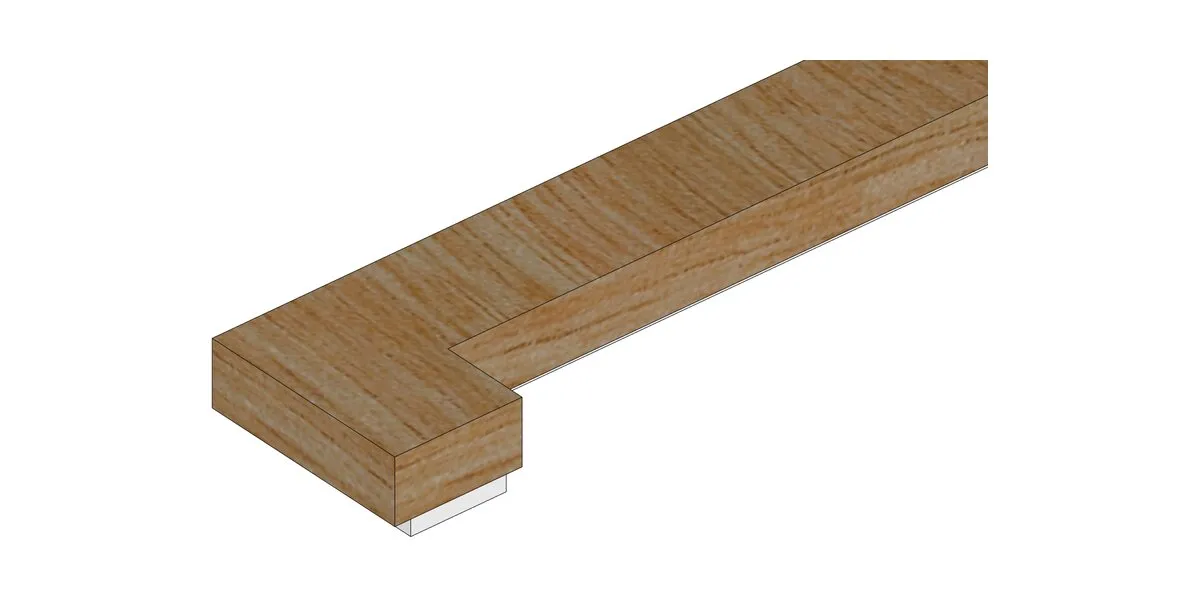
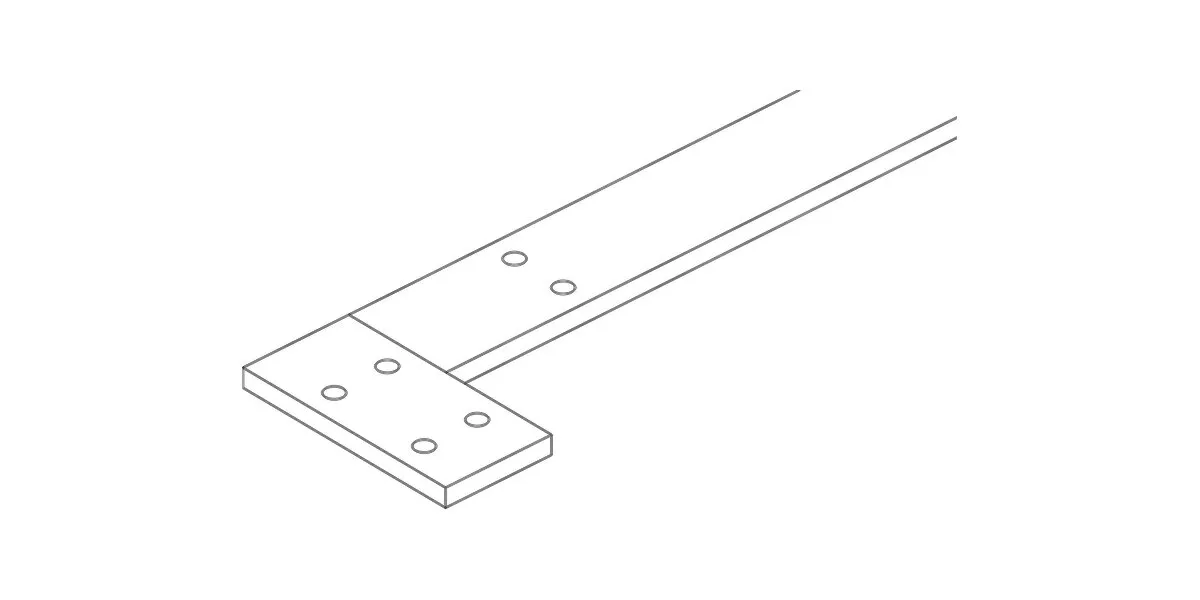
A metal flat bar carries the load and a wood cap is screwed on from below. You get the warm feel of wood under the hand and the strength of metal underneath. The flat bar is pre-drilled for the cap.
Why choose it
Good to know
Curved arm, round wall plate, flat saddle. Suits a wood top or flat bar.
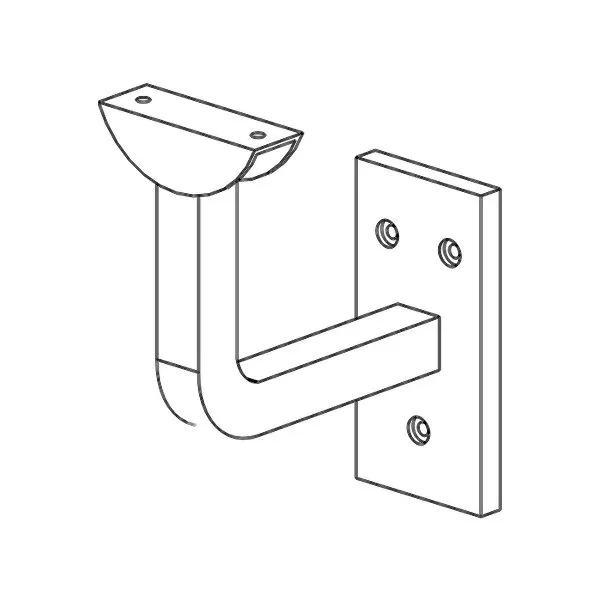
Square-bar arm on a rectangular plate. Heavy duty for long runs.
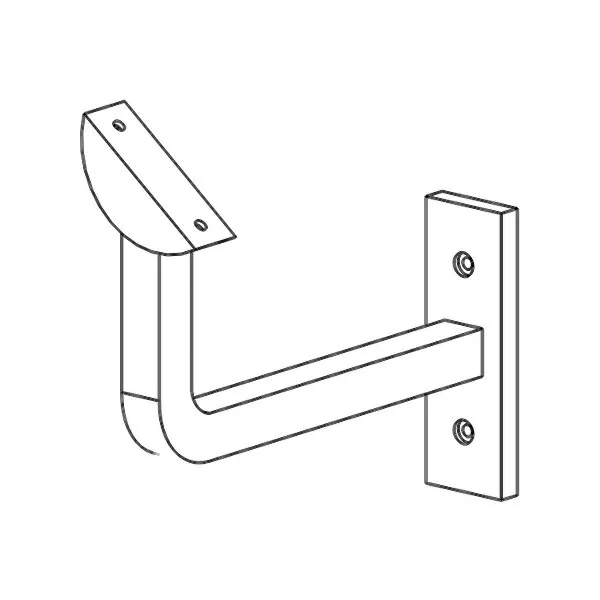
The same arm on a narrow two-screw plate. Less metal on the wall.
Safety & Code
The same rules apply on posts or on the wall. These are the numbers we design to, and we confirm the version your city has adopted before we build.
When is a handrail required?
Houses, duplexes, townhouses
Shops, offices, churches, multifamily
34–38"
Height
Measured up from the stair nosing.
1½"
Wall clearance
Minimum gap behind a grab rail.
30"
Drop
Above this, you need a guard railing.
200 lb
Load
Posts and brackets built to hold it.
Materials
Pick by where the rail goes and how you want it to look.
Steel
Strongest for the size. Powder coated in any color, or hot-dip galvanized for exposed steps.
Aluminum
Light and rust-free. A good pick for outdoor steps and entries. Powder coated.
Stainless steel
Brushed metal with no coating to chip. Made for wet areas and heavy use.
How It Works
Our Handrail & Grab Rail Projects
Serving Greater Seattle Area
Measured, fabricated in Everett and installed by our own crew across the greater Seattle area.
Shop in Everett, WA
Don't see your city? Send us your ZIP code — we'll confirm we cover it and book a time to measure on site.
Check my areaFAQ
A handrail here stands on its own posts beside open steps. A grab rail is what most people call a wall-mounted handrail: a single rail fixed to the wall on brackets. Both follow the same handrail code.
At a house, duplex or townhouse, a stair with four or more risers needs a handrail on at least one side, indoors or outdoors. At commercial and apartment buildings, stairs need handrails on both sides, even for two steps. Either way the rail sits 34" to 38" above the nosings and runs the full flight. Fewer than four steps at home? It is not required, but on wet outdoor steps we suggest adding one.
If the open side drops more than 30", you need a guard railing with infill. Below that, a handrail is usually all the steps need. We check this when we measure. See metal railings.
Yes. We find the studs behind the drywall and screw every bracket into wood, not into the drywall alone. Where a stud isn't in the right place, blocking goes in first.
Every rail is sandblasted to bare steel and powder coated, or hot-dip galvanized for the most exposed spots. Aluminum and stainless don't rust at all.
Free Quote
Send a photo of the steps or the wall and we'll tell you what they need, then come out to measure.
Prefer to call?
(206) 849-8193