All Steel
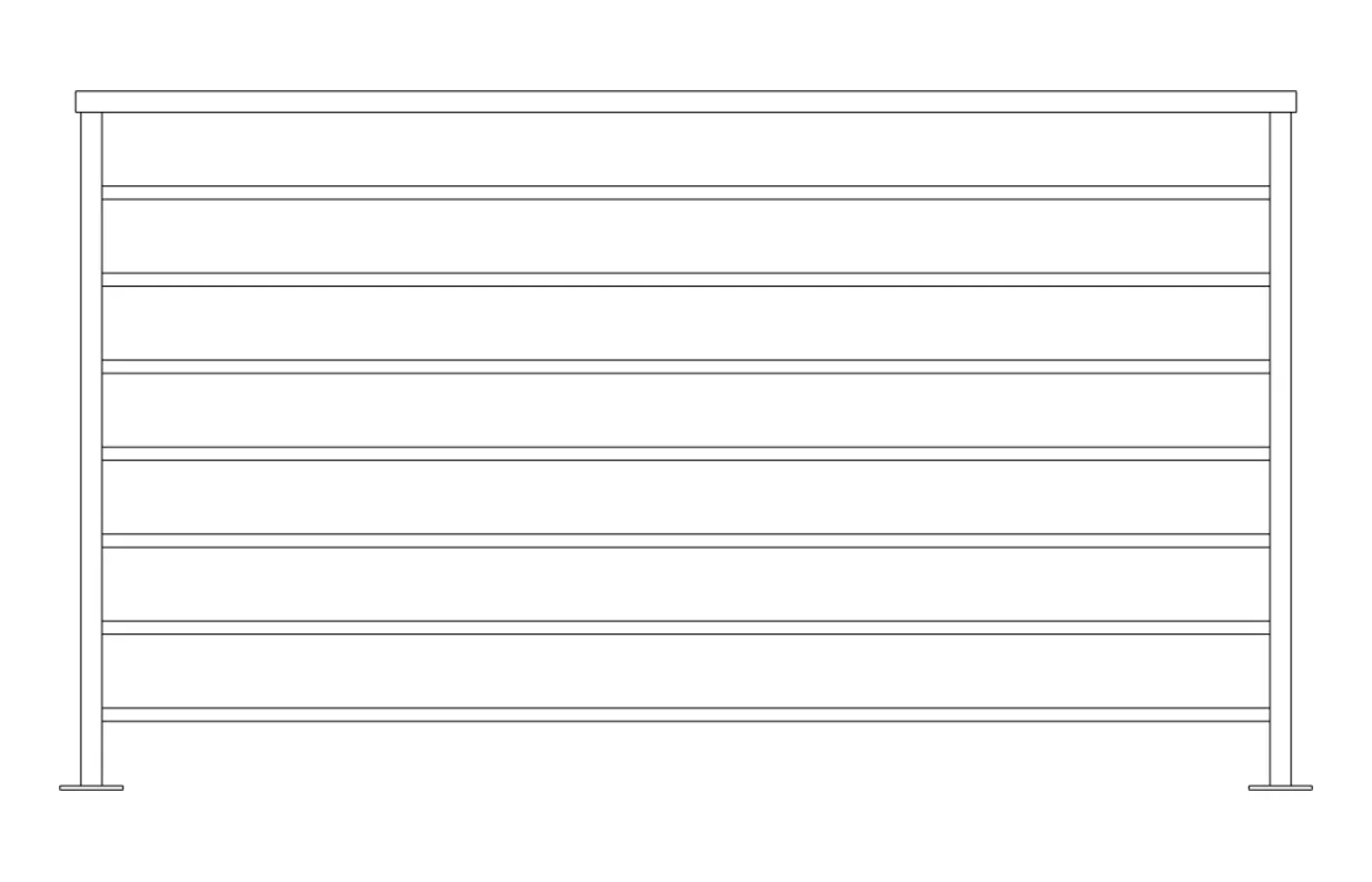
Steel posts and a flat steel top rail, powder coated — matte black is the classic. The slimmest, most modern look.
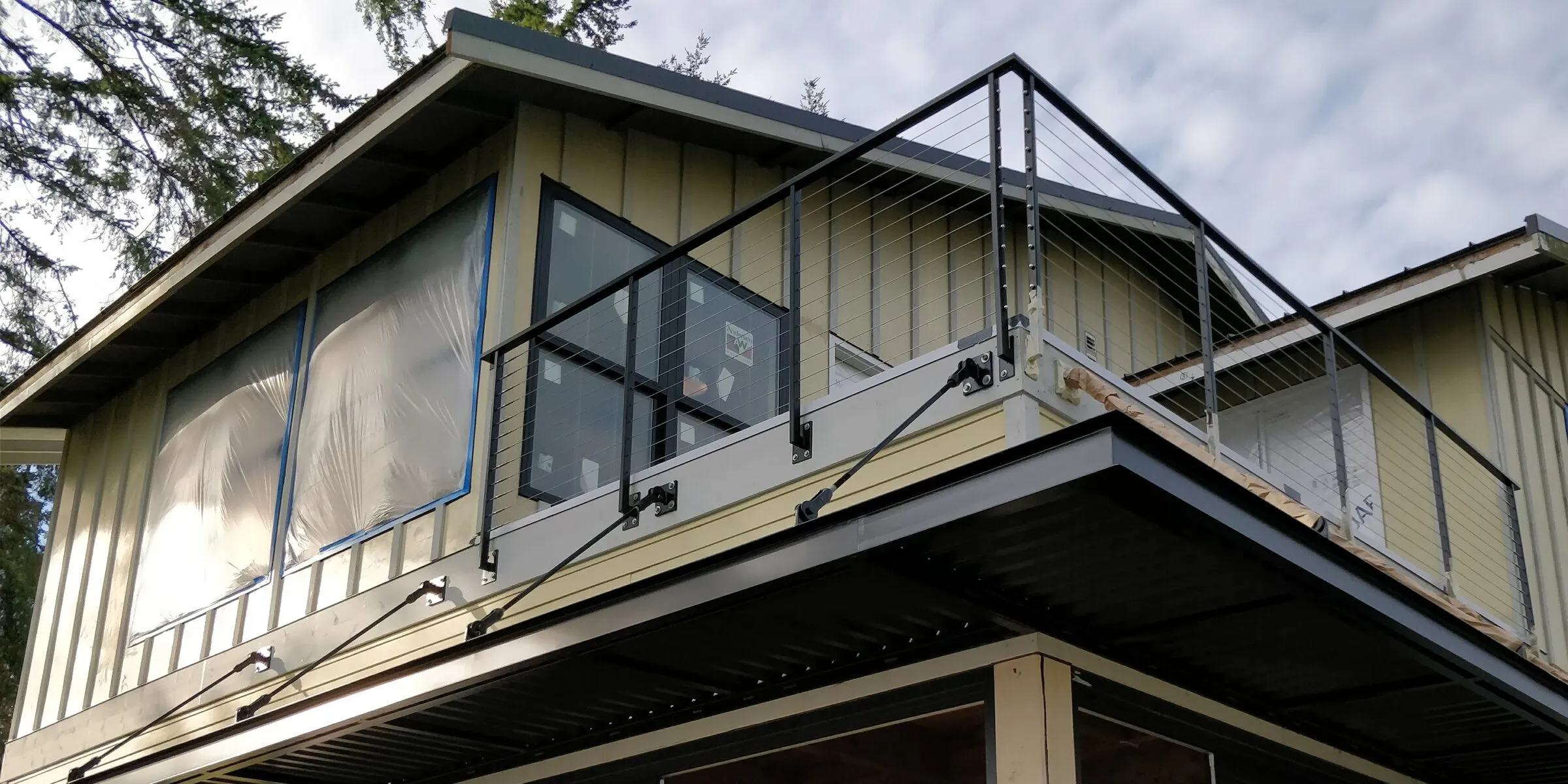
Marine-grade stainless cable on custom steel posts and top rail — for decks, stairs and rooftops where the view is the point. Fabricated in our Everett shop, tensioned and installed to code by our own crew.
How Cable Railing Works
The cables are only as good as what holds them. Every cable pulls hard on the end posts, so the frame has to be stiff enough not to bend — that is why we build it from welded steel instead of a kit bolted to wood.

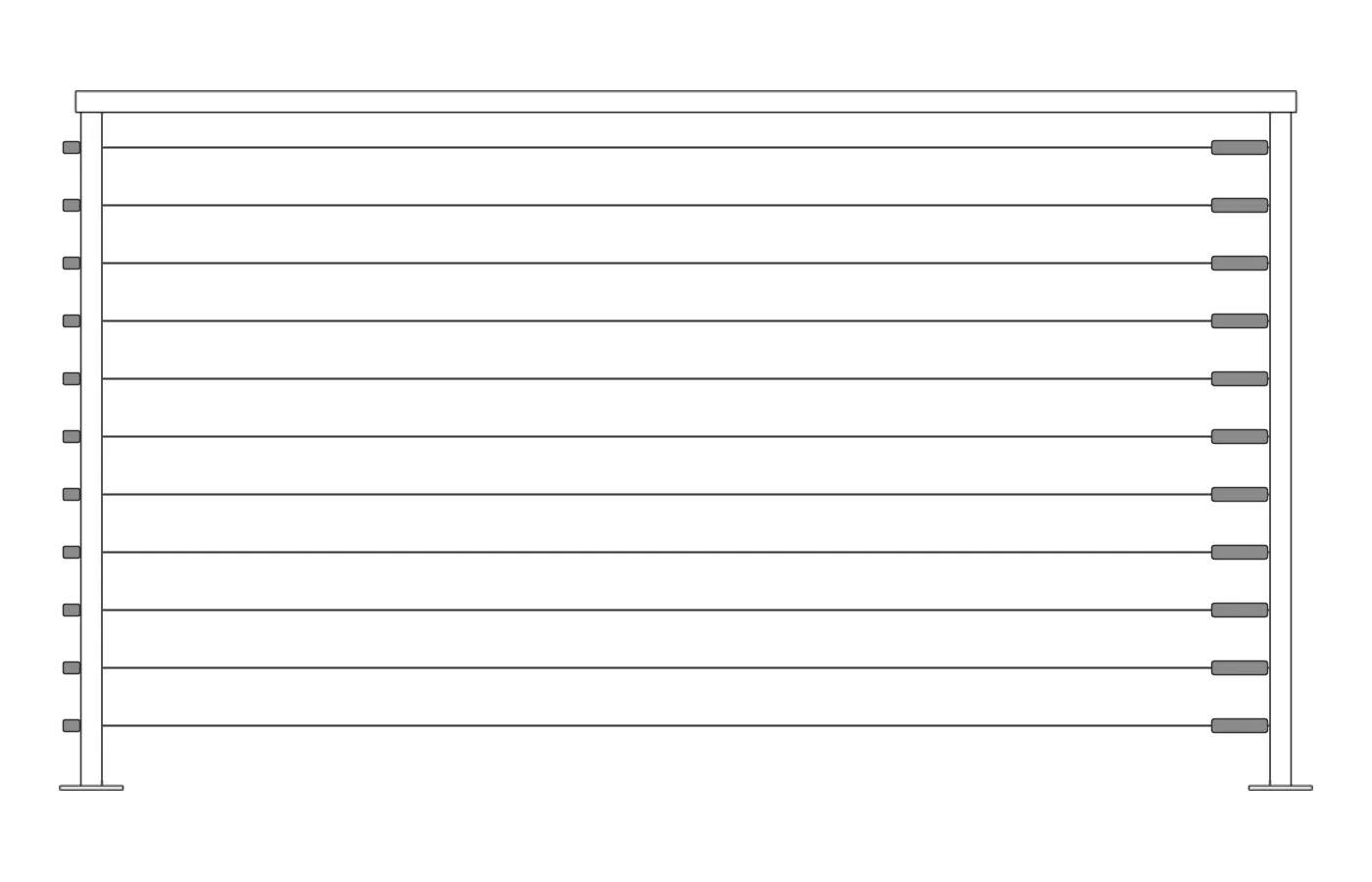
Cables about 3" apart
Close enough that a 4" sphere can't push through — even when the cable flexes.
Posts every ~4 ft
Keeping posts close keeps each cable span short, which keeps deflection small.
End posts built for load
Each cable can pull hundreds of pounds — welded steel end posts don't bow.
Design
The cable is always stainless and runs post to post — the frame around it is what you choose.
Steel posts and a flat steel top rail, powder coated — matte black is the classic. The slimmest, most modern look.
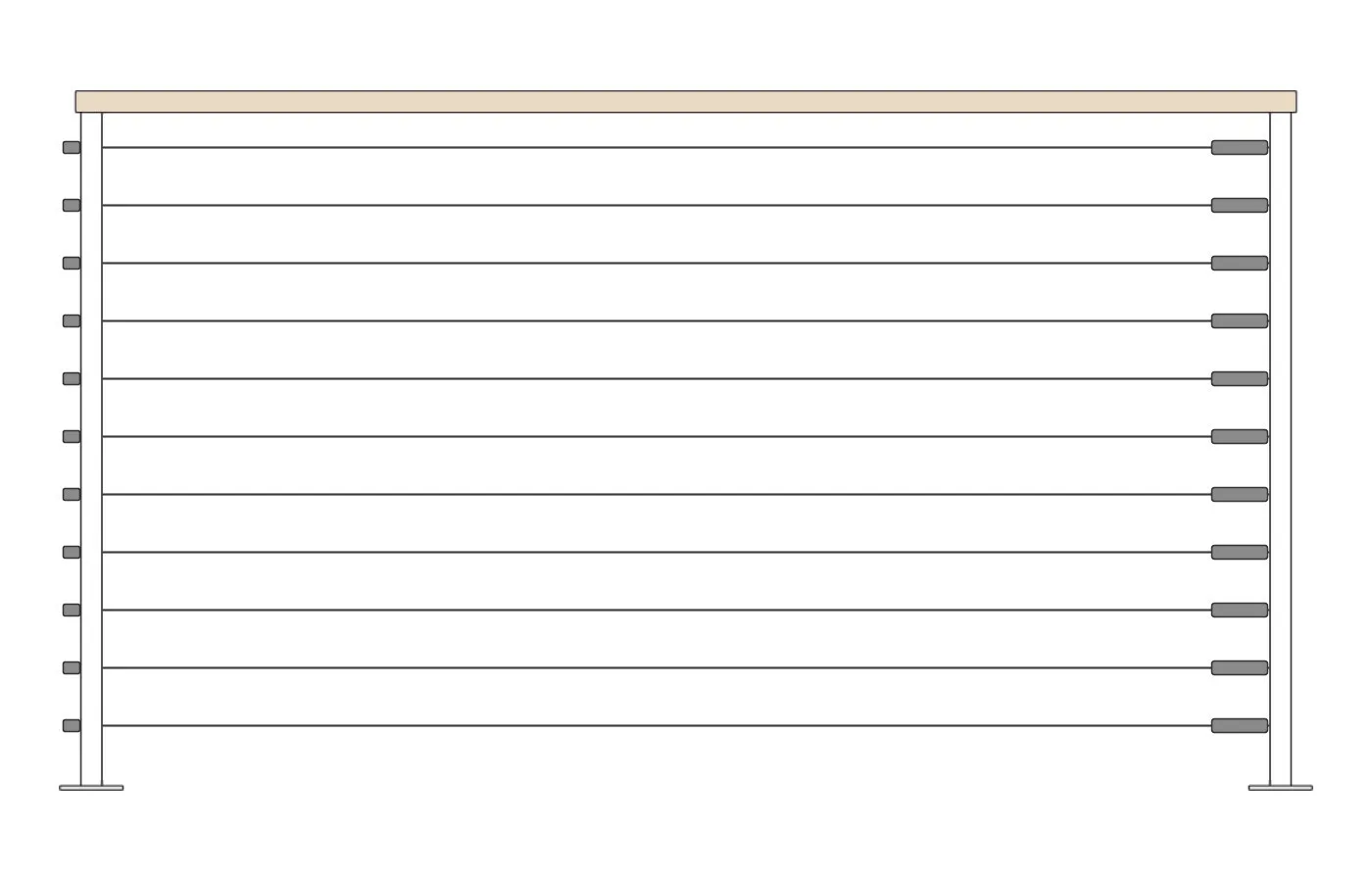
Steel posts carry the tension; a cedar or hardwood top rail adds warmth and ties the railing to a wood deck.
Where We Install
Surface- or fascia-mounted on wood, composite and concrete decks.
Where a solid rail would block the skyline, the water or the mountains.
Raked cable runs that match the deck railing above.
Open stair guards and loft edges that keep light moving through the room.
Code & Safety
Yes — when it's built right. Cable is the one infill where the 4" rule is tested with the cable pushed aside, so spacing, post spacing and tension all matter. We confirm the requirements with your city before we fabricate.
<4"
Max opening
Even with the cables spread apart by hand.
≈3"
Cable spacing
Tighter than other infill to allow for flex.
≤4 ft
Post spacing
Posts close together limit cable deflection.
36" / 42"
Guard height
Residential / commercial minimums.
Small kids at home?
Horizontal cable meets code, but it can be climbed. If that worries you, look at glass railings or vertical-picket metal railings.
The Cable
We use marine-grade 316 stainless cable — the grade made for salt air and rain. For some interior projects, 304 stainless is an option. The fittings are matched to the cable, and the steel frame is powder coated to match the rest of your house.
Cable grade
316 stainless
304 for some interior projects
Diameter
1/8" or 3/16"
Fittings
Hidden or visible
Frame finish
Powder coat, any color
Maintenance
Check tension once a year
Cables relax with temperature swings. A quick turn of the tensioner brings them back.
Rinse a few times a season
Fresh water and a soft cloth keep stainless bright, especially near salt water.
That's it
No glass to squeegee, no paint to touch up — the powder-coated frame takes care of itself.
Frame Finish
The cable stays stainless; the posts and top rail are powder coated in Cardinal powder. Matte black is the favorite — it makes the frame read as a crisp outline around the view.
See all colors & finishesOur Cable Railing Projects
Serving Greater Seattle Area
Measured, fabricated in Everett and installed by our own crew across the greater Seattle area.
Shop in Everett, WA
Don't see your city? Send us your ZIP code — we'll confirm we cover it and book a time to measure on site.
Check my areaFAQ
Price depends on length, number of corners, stairs and the top-rail material — we give a fixed quote after measuring.
Yes. It must stop a 4" sphere even when the cables are pushed apart, so spacing, post spacing and tension are designed together. We confirm details with your city.
It meets code, but horizontal cable can be climbed. Glass or vertical metal pickets are better if that's a concern.
They can relax a little with temperature changes. A stiff steel frame keeps it minimal, and a yearly check of the tensioners keeps them tight.
Cable is lighter-looking and easier to keep clean; glass blocks wind and can't be climbed. Compare with glass railings.
Most residential installs take 1–2 days on site — the frame is fabricated in our shop first, then the cables are run and tensioned on site.
Free Quote
Rough lengths, the number of corners and a photo are enough for a price range. We then measure on site for a fixed quote.
Prefer to call?
(206) 849-8193